
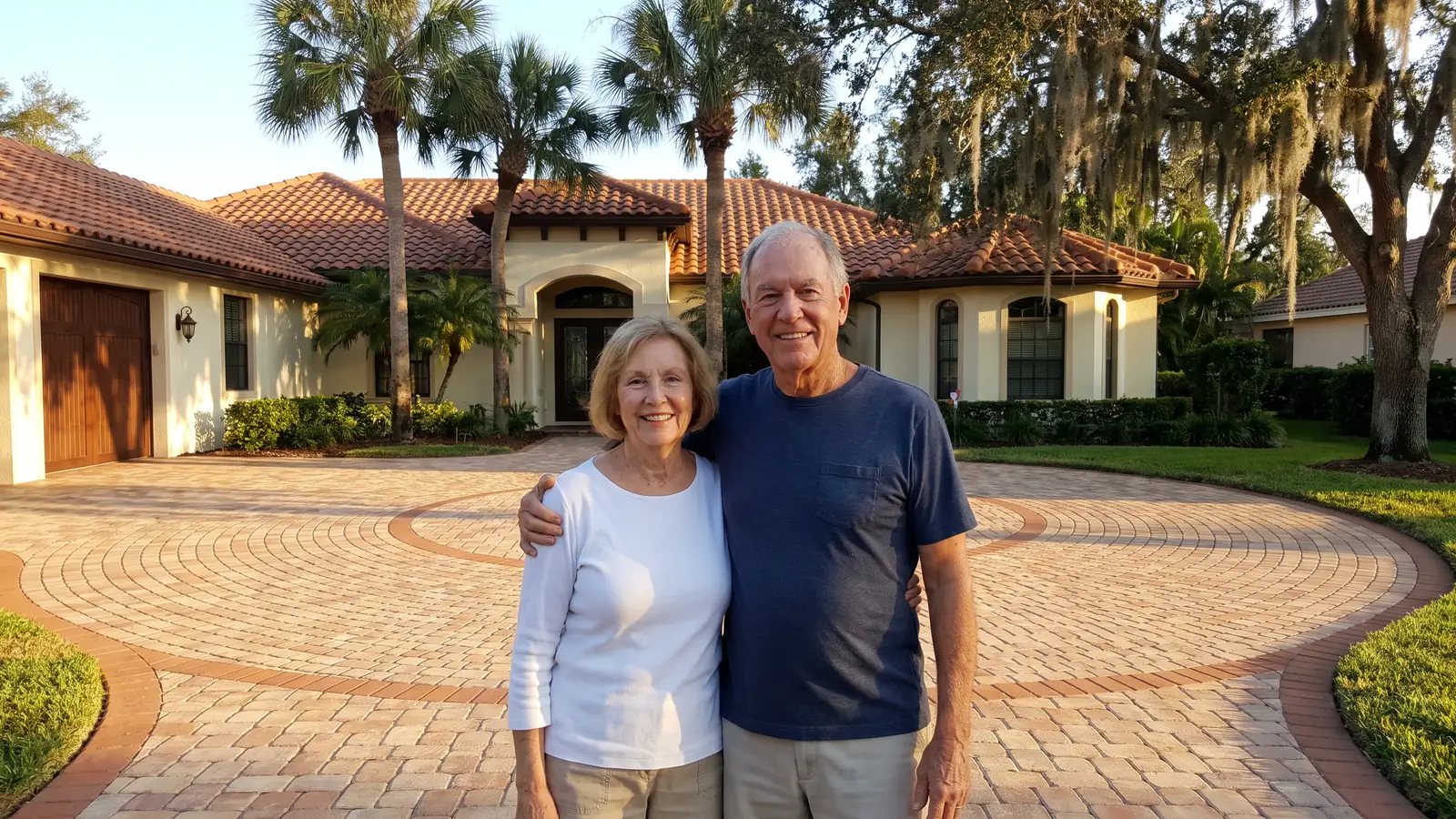
Paver sealing for Palm Valley homes
Paver Sealing in Palm Valley, FL
Pavers fading in Palm Valley? Get local help from Paver Sealing Ponte Vedra Beach. Call (904) 694-6107
- Brings out deeper paver color
- Fresh joint sand helps lock pavers in place
- Gives weeds less room to grow
- Makes the surface easier to keep clean
- Free estimate, no obligation
Request a Free Estimate
Free, no obligations.
Fast, careful paver sealing help in Palm Valley
If your Palm Valley driveway or pool deck needs paver sealing, a local contractor can look at it for free and say what it needs. The work covers cleaning, fresh joint sand and sealer on driveways, walkways, patios and pool decks. When you request a quote, you can expect to hear back within 1 business day, usually much sooner.
Picture the pavers by your front door gone chalky, with sand low in the joints and a green line creeping in on the shady side. After a wash, new sand and a fresh coat, the color returns and the whole drive reads as one surface again. To talk it over first, call (904) 694-6107 and tell the contractor what you see, with no obligation to go ahead.
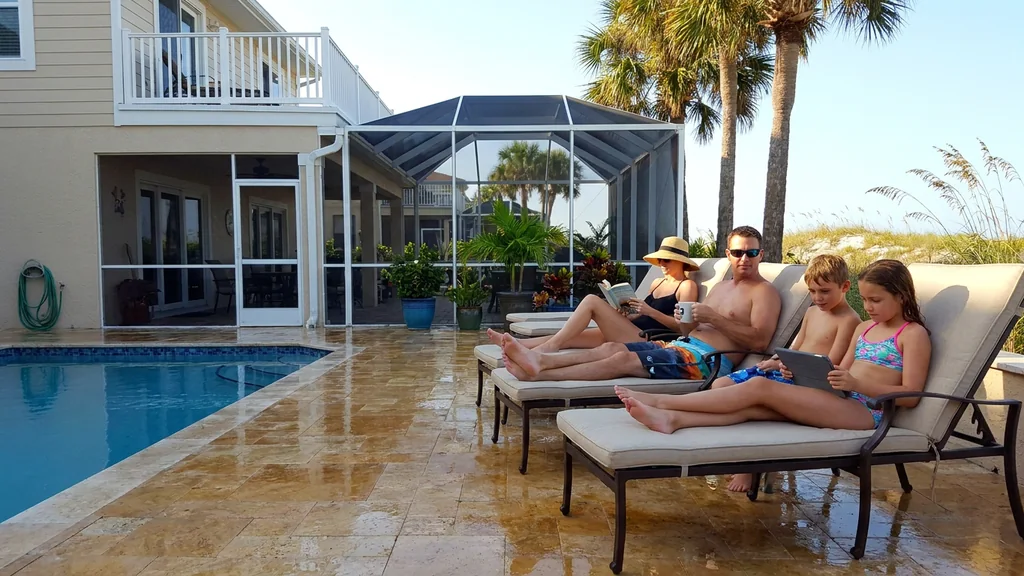
Why Palm Valley chooses Paver Sealing Ponte Vedra Beach
Palm Valley sits between the Intracoastal Waterway and A1A, and homeowners tend to want someone who knows how water behaves on that strip. To find out what that means for your own lot, request a quote.
Free look, no pressure
The contractor walks your Palm Valley pavers at no charge. You see a price before you agree to anything.
A number to measure against
Northeast Florida companies commonly publish $1.50 to $2.50 per square foot to clean, sand and seal. Use it to compare Palm Valley bids.
A finish that fits how you live
A wet look adds shine and shows scuffs sooner than matte. Tell the contractor how your Palm Valley driveway gets used.
A date picked around the rain
Palm Valley's wetter season runs June into early October. You and the contractor choose a day around the forecast.
Get Your Free Estimate in Palm Valley
Tell us about your pavers in Palm Valley.
Free, no obligations
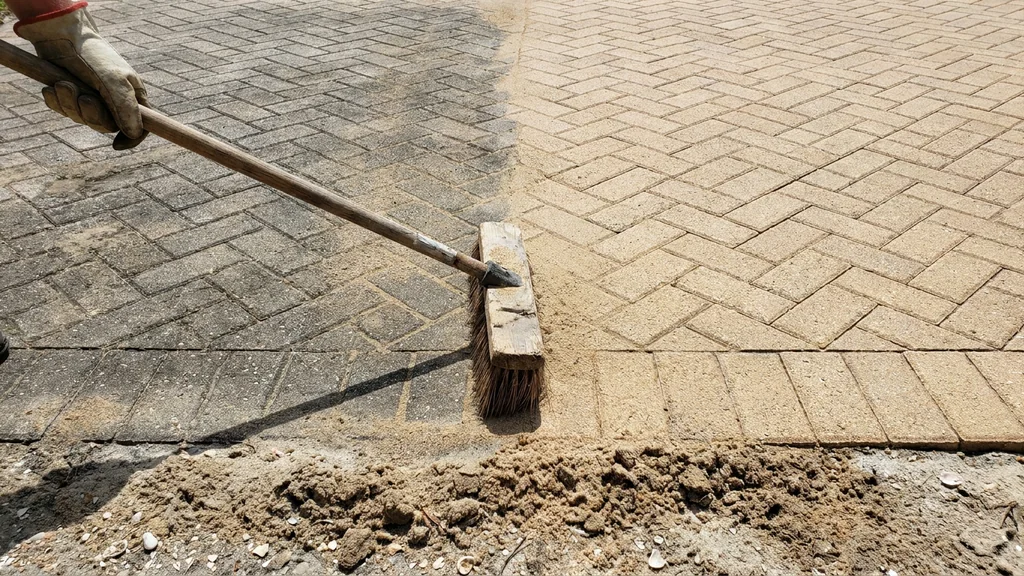
What paver problems show up most in Palm Valley?
Salt near the Intracoastal and A1A
Palm Valley lies between the Intracoastal Waterway and A1A, with homes that look out over the water. Unsealed pavers let salt settle and work into the pores, according to one Ponte Vedra Beach paver company. Plants within about one-eighth of a mile of salt water need some salt tolerance, according to University of Florida guidance. That rule is written for plants, but it gives you a rough idea of which lots to watch first.
Joints that empty out over a wet summer
University of Florida extension describes coastal soils as sandy, and Palm Valley's wetter season runs from June into early October. The same Ponte Vedra Beach company says sandy ground, hard rain and any slope together will carry joint sand away. When joints sink, pavers lose the side support they give each other, which means a simple wash and seal can grow into a repair job. Check the low edge of your Palm Valley driveway first.
Green film on the shady side
Humid air hangs around Palm Valley for about six and a half months, from late April to mid November. Trade guidance says moss and algae tend to show up on pavers only where shade is heavy and the surface stays damp. If part of your walkway sits under trees or along the north side of the house, that is where the green starts. It has to come off before sealing, because sealer locks in whatever is underneath.
Sealer from a past owner
If you bought your Palm Valley home from someone else, you may have no idea what went on the pavers before you. That matters in Palm Valley, because water-based sealer cannot go over solvent-based sealer. Patches that look cloudy or flake off underfoot tell the contractor the old coat has to be dealt with first. Any paperwork the last owner left behind can save time at the estimate.
Rust arcs from a well
University of Florida extension says most Florida well water is high in iron. Sprinklers fed by it can paint orange marks on whatever they reach. If your Palm Valley yard waters from a well, look for rust-colored arcs where the spray lands on the pavers. Those marks need treating before the sealer goes on, since a coat would hold them in place.
Does the part of Palm Valley you live in change the paver work?
It can, because Palm Valley runs from the Intracoastal Waterway east toward A1A. The area counts about six formal neighborhoods, including Palm Valley Landing, Plantation Oaks, Seaside, Odom's Mill and Dolphin's Cove. Part of Sawgrass is here as well, where the TPC course hosts a yearly golf tournament. Tell the contractor your neighborhood when you request a quote.
Farms once filled much of the valley, and most have given way to luxury homes overlooking the Intracoastal Waterway. A lot like that puts your patio or pool deck closest to the water, so salt and damp get the first look at the estimate. A home set farther back may have more trouble with shade and joint sand instead. If your Palm Valley home backs up to the waterway, call (904) 694-6107 and say so.
If your street has a homeowners association, ask whether it has a say over exterior work or finishes before you pick a sealer. Your own association is the place to check, and it helps to have the product name and finish ready. Palm Valley held 10,016 housing units at the 2020 census, so what applies next door may not apply to you. Once you know where you stand, request a quote.
What does paver sealing cost in Palm Valley?
In Palm Valley, the published regional range is $1.50 to $2.50 per square foot to clean, sand and seal. A Palm Valley home lands higher or lower depending on lost joint sand, failing old sealer and the size of the layout. A driveway plus a pool deck adds up fast even at the same rate. To put a real number on your pavers, request a quote, with no obligation to hire anyone.
A Jacksonville paver company lists surface prep, drying time and stripping failed sealer among the things that drive cost. Drying runs slower through the humid stretch, which covers more than half of the Palm Valley year. Gates, tight side yards and gear carried around to a waterfront patio can add time as well. Call (904) 694-6107 and run through which of these sound like your lot.
| Paved area | Typical example | Clean, sand and seal |
|---|---|---|
| 300 sq ft | Small patio or walkway | $450 to $750 |
| 600 sq ft | Two car driveway | $900 to $1,500 |
| 1,000 sq ft | Large driveway or pool deck | $1,500 to $2,500 |
| 1,500 sq ft | Driveway plus pool deck | $2,250 to $3,750 |
Math based on the $1.50 to $2.50 per square foot that Northeast Florida paver companies published as of November 2026. Your contractor sets the actual price after seeing the surface. Repairs, leveling and stripping failed sealer are usually extra.
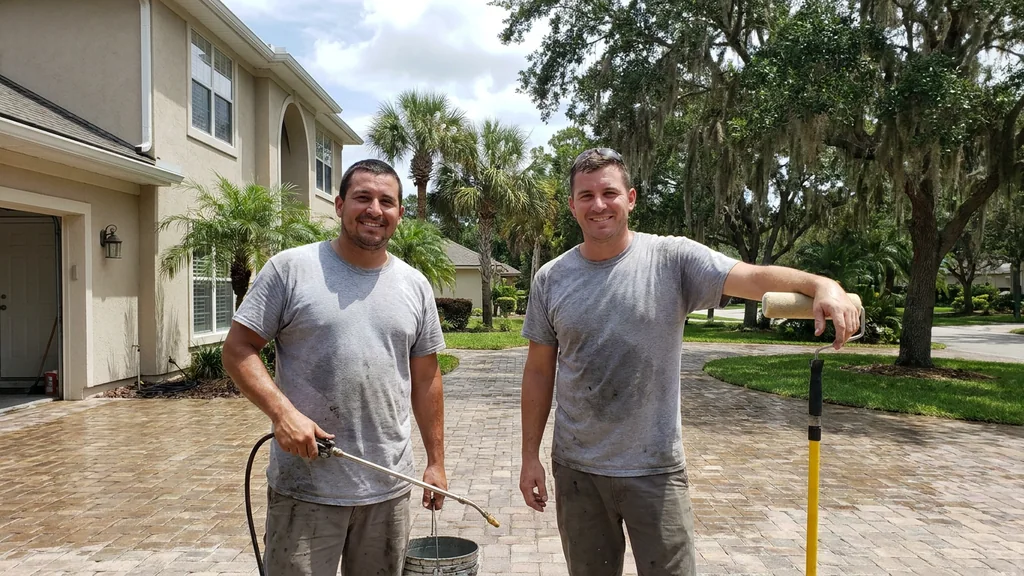
How does a paver sealing job work in Palm Valley?
Walk the lot from the water side in
The contractor starts by looking at how your Palm Valley pavers drain and which parts see the most sun, shade and water. Sunken or lifted spots get fixed first, since sealing locks in whatever shape the surface is in. If a coat is already down, the product matters, because water-based sealer cannot go over solvent-based sealer. Point out anything that changed after a storm.
Clear off salt, film and rust
Next comes the wash, at a pressure set so the joints are not blown out. Trade guidance says professionals use a wide nozzle to help keep sand in place. Green film on the shady side and any rust from irrigation get treated at this stage. Palm Valley pool decks get a closer look too, since travertine needs different handling than concrete pavers.
Refill every joint
The wash takes sand out of the joints along with the dirt, and that sand has to be replaced before any sealer goes down. On Palm Valley's sandy ground, a low joint is where weeds and ants get started. The contractor packs it in until each joint is level and then sweeps the surface clean. If the sand has been low for years, expect this step to run longer.
Wait for bone-dry pavers
Sealer needs a dry surface, and Palm Valley's wetter months run from June into early October. Afternoon storms can push a date back, and a shaded pool deck can stay damp well after the driveway has dried. A careful contractor checks the forecast and the low spots before opening a pail. Turn your irrigation off ahead of time if the contractor asks.
Coat it, then stay off
Sealer goes on in the finish you picked, often sprayed and then back-rolled into the joints. Foot traffic is usually fine in a few hours, and cars need about a day, depending on the product and the weather. Companies commonly quote two to five years between coats, so ask where your Palm Valley exposure puts you. Water that beads later on means the coat is still working.
Complete paver services in Palm Valley
Four things happen on a Palm Valley job, always in this order. The pavers get washed, the joints get fresh sand, the surface dries out, and then the sealer goes on. Doing it out of order traps dirt under the coat. Call (904) 694-6107 to ask how long each part would take at your home, and what might slow it down.
Driveways off Palm Valley Road take daily tires, and pool decks take splash and standing water. Walkways beside the house may sit in shade and go green first. Travertine around a pool is sealed differently from concrete pavers, often in a matte finish. Tell the contractor which of these you have when you request a quote, and the quote can cover them together.
Sealers come in water-based and solvent-based, and the finish is usually matte or a wet look. If an earlier owner used a solvent-based product, a water-based coat cannot follow it, so the old coat settles that choice. A wet look darkens the color and shows scuffs sooner than matte does. Call (904) 694-6107 and the contractor can walk you through what suits a Palm Valley home.
Palm Valley's wet season winds down in early October, and the muggy stretch ends around mid November. That makes the cooler, drier months an easier time to find a clean sealing window. Summer work is still possible, with a few more rain dates on the calendar. For a day that fits your street and your schedule, request a quote.
Questions to ask before you hire
- How do you keep the new sand from washing out?
- If I spot a problem next month, how do I reach you?
- Can I see wet look and matte samples before I choose?
- Can you do a test patch before you start?
- Will you send me a copy of your insurance and any license this work needs?
- What brand of sealer do you plan to use on my pavers?
- If rain shows up on the day, how do you reschedule?
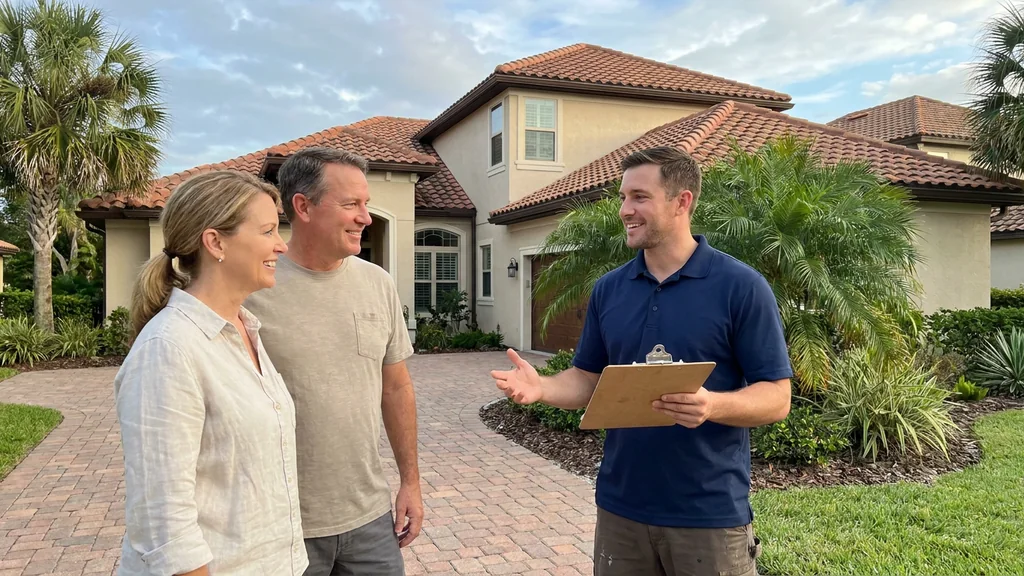
Why local matters in Palm Valley
A contractor who knows Palm Valley will ask how close you are to the Intracoastal and how your lot drains toward it. Those answers change how much washing the surface needs and how often to expect a new coat. Someone from farther inland may not think to ask. To reach a contractor who works Palm Valley streets, call (904) 694-6107.
History shows up in the ground here too. A canal cut in 1908 tied the San Pablo River to the Tolomato River, and farms and fish camps grew up around it. Much of it has been reworked since, and a low spot in a driveway can be the first sign of what sits underneath. If a section of your Palm Valley pavers keeps settling, request a quote and mention it.
Palm Valley Road was once dirt and now carries heavy traffic at most hours, with a newer traffic circle along the way. That makes access and parking worth a quick talk before anyone arrives. A quiet side street is simpler than a driveway that opens right onto the main road. Call (904) 694-6107 and say which road you are on.
What should a contractor know about Palm Valley before starting work?
A contractor should know this was working land long before it was waterfront real estate. Until 1906 this was Diego Plains, and families here once shipped about 400,000 palm fronds a year to northern churches. Papa George Oesterreicher's fish camp ran for decades under the bridge. If you live near the canal and your patio needs attention, request a quote.
Canal Boulevard is where residents moved a building from Camp Blanding in 1948 to serve as a community center. The Old Clam Shell and The Anchorage were fish camps too, and cypress came out at Cracker Landing on the west side of the canal. Today Palm Valley counts 21,827 residents, with Ponte Vedra High School serving all of them. If that sounds like your end of the valley, call (904) 694-6107 and mention the road you live off.
Frequently Asked Questions
What is the average cost to seal pavers in Palm Valley, Florida?
Palm Valley homeowners can plan on $1.50 to $2.50 per square foot to clean, sand and seal, which is what regional companies commonly publish. Your total depends on square footage, joint sand loss and any old sealer. A failed coat that has to be stripped will cost more than a simple recoat. Ask for the measured area in the quote so you can check it against that range.
Is it good to seal pavers in Palm Valley, Florida?
Yes, as long as the pavers are still sound and level. A St. Augustine area company says sun fades paver color while storms and sprinklers pull out joint sand, and sealing slows both. Close to the Intracoastal, a Ponte Vedra Beach company says salt also works into unsealed pavers. Sealing will not fix sunken pavers, so those get repaired first.
Why is paver sealing so expensive in Palm Valley?
Most of the price pays for prep, not the coat you see at the end. A Jacksonville paver company names cleaning, drying time, joint sanding and stripping failed sealer as the main cost drivers. On a Palm Valley lot with a driveway, walkway and pool deck, that is a lot of surface to get ready.
How often do you need to reseal pavers in Palm Valley, Florida?
Palm Valley homes can expect two to five years between coats, going by what companies commonly quote. A Ponte Vedra Beach company suggests the shorter end for homes near the water or in full sun. Water that beads on the surface means the coat is still working.
What if I do not know what was put on my Palm Valley pavers before?
A contractor has to identify it before choosing a new product, because water-based sealer cannot go over solvent-based sealer. Keep any receipts, product names or paperwork from the past owner, including anything left behind in the garage. If there is nothing to go on, ask how the contractor plans to test it.
Can a sunken spot by my pool be fixed before sealing?
Yes, and it should be fixed first. Sealing locks in whatever shape the surface is in, so low or root-lifted areas get re-leveled before the coat goes on. Point out any soft spots around your Palm Valley pool deck at the first visit.
How long until I can drive on sealed pavers?
Plan on about a day before cars go back on, though the product and the weather decide it. A Jacksonville paver company says walking is usually fine within a few hours. A humid Palm Valley day can stretch that, so ask for the exact window and keep sprinklers off the surface until then.
Should a Palm Valley pool deck get the same sealer as the driveway?
Not always, because travertine needs different treatment than concrete pavers. A Ponte Vedra Beach company seals travertine in a matte finish as its default. A St. Johns County paver company says pool surrounds also need their own drying plan because of splash and shade. Tell the contractor what your Palm Valley pool deck is made of at the first visit.
Ready for a Free Estimate in Palm Valley?
Call (904) 694-6107 and tell us about your pavers.
Free, no obligations