
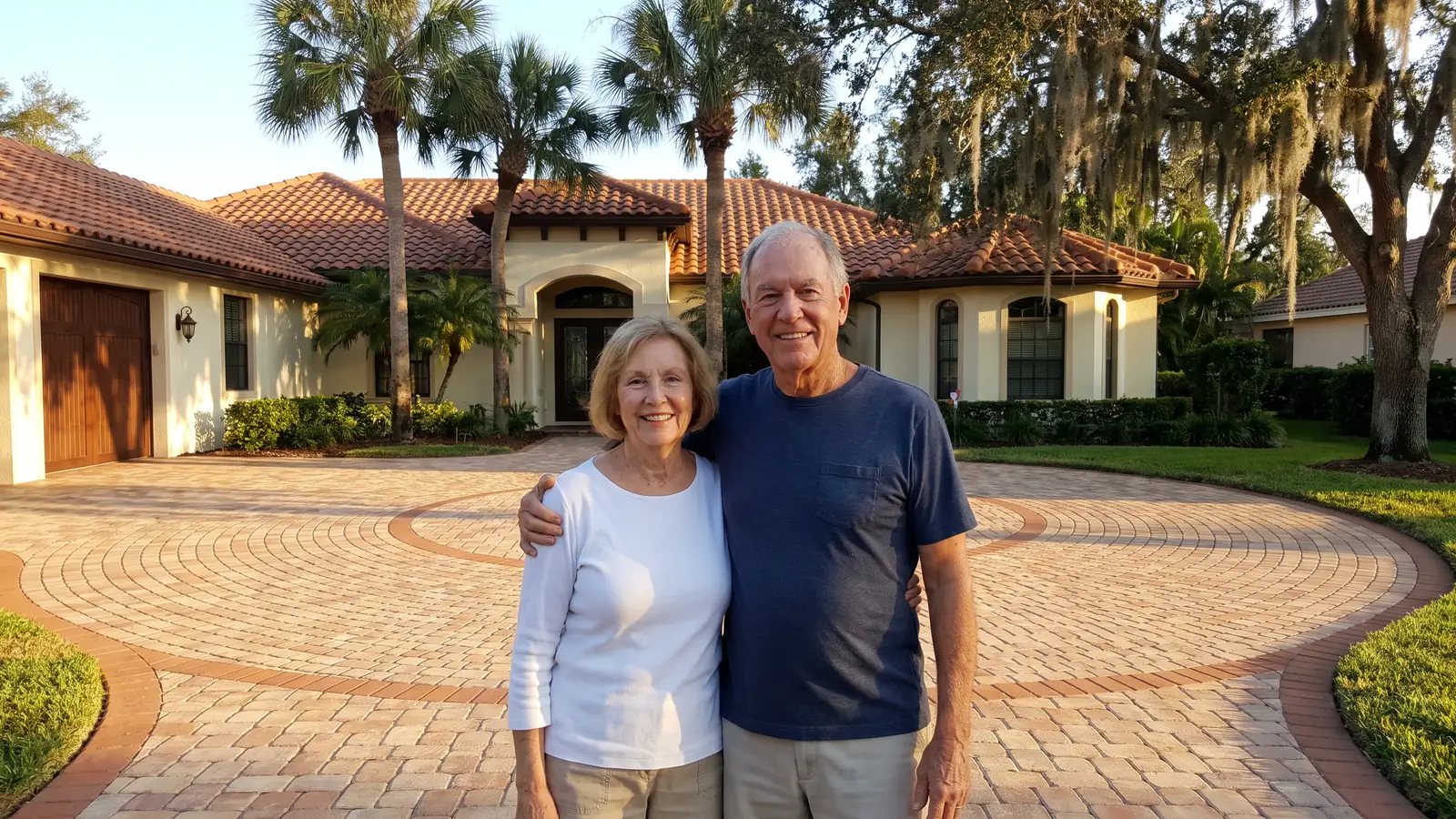
Paver sealing for Southside homes
Paver Sealing in Southside, FL
Pavers fading in Southside? Get local help from Paver Sealing Ponte Vedra Beach. Call (904) 694-6107
- Brings out deeper paver color
- Fresh joint sand helps lock pavers in place
- Gives weeds less room to grow
- Makes the surface easier to keep clean
- Free estimate, no obligation
Request a Free Estimate
Free, no obligations.
Fast, careful paver sealing help in Southside
Need paver sealing on the Southside of Jacksonville? From a 1950s ranch in Englewood to a gated lot in Deercreek, a local contractor can wash, re-sand and seal your driveway, walkway or patio. Request your free estimate and you will hear back within 1 business day, usually much sooner. To get started, request a quote.
Plenty of Southside pavers went in years after the house was built, and they show it now. The color has gone flat, weeds line the joints and the low corner stays dark after every storm. Picture that same driveway in one even tone, with tight, clean joints and nothing growing in them. For a straight answer with no obligation, call (904) 694-6107.
Why Southside chooses Paver Sealing Ponte Vedra Beach
Southside homeowners often want someone close by because a 1950s ranch and a 1989 gated lot need different prep. Tell the contractor your neighborhood and request a quote.
Knows the old subdivisions
A Southside contractor expects unknown sealer on older pavers in Englewood and Home Park, and checks for it first.
A number to compare
The published range across Northeast Florida is $1.50 to $2.50 per square foot. Measure any Southside bid against it.
Creek and shade checked
Damp corners near Pottsburg Creek and shady Lakewood walks get a closer look before anyone sets a date.
Free, with no strings
You get a Southside estimate at no charge. Nothing moves forward until you say yes to the price.
Get Your Free Estimate in Southside
Tell us about your pavers in Southside.
Free, no obligations
What paver problems show up most in Southside?
Low corners near Little Pottsburg Creek
Englewood was platted in 1926 along Little Pottsburg Creek, and creeks lace through much of this part of town. Pottsburg Creek itself takes in rainwater, retention ponds and storm drains, so its level moves around a lot. Yards that slope toward that water stay damp longer, and a damp corner holds growth and delays sealing. Walk your lot after a heavy rain and note where the water sits, then share that with the contractor at the first visit.
Green film under Lakewood's older trees
Lakewood, largely built out by 1961, is known today for its mature landscape, and trees that old shade walks and patios. Moss and algae show up on pavers where shade is thick and the surface never quite dries. If your Southside walkway turns slick and green in one stretch, look straight up for the cause. Cleaning handles what is there now, but growth can return wherever that shade and dampness stay put.
Sand that keeps leaving the joints
Duval County is sand country, and the USDA says the Ortega series, first described here, is fine sand more than 80 inches deep. Add roughly 52 inches of yearly rain, a lot of it falling in short summer storms, and joint sand has a hard time staying put. Low joints let soil and weed seed settle in, so the weeding never ends. Full joints topped with fresh sand give the sealer something solid to hold together.
Pavers added long after a midcentury build
Recent listings in Southside Estates show a median build year of 1952, and Spring Park Manor and Home Park went up in that same decade. Pavers on those lots were likely added later, by owners you never met. The old product matters, since water-based sealer cannot go over solvent-based sealer, and a patchy surface is a warning. Anything you know about past work, even a rough year, helps narrow down what was used.
Orange stripes from sprinklers
University of Florida extension says most Florida well water is high in iron and can leave rust deposits. If an older Southside lot waters from a well, look for orange lines where the spray lands. Sealer would trap those marks under a clear coat, so they have to come out first. Pointing the sprinkler heads elsewhere stops new stripes from forming, which protects the fresh coat for longer once the job is done.
Which part of the Southside are your pavers in, and why does it matter?
It matters because the Southside is huge and its homes span nearly a century. Englewood goes back to a 1926 plat and grew with modest ranch houses, and Interstate 95 later cut it in two. Spring Park Manor and Home Park came in the 1950s. On those older lots, tell the contractor what you know about past work when you request a quote.
Lakewood is its own story, built by Walter Crabtree from 1946 between New Rose Creek and Christopher Creek. His streets carry college names like Clemson, Cornell, Fordham and Emory, and the homes lean Mid-century Modern. Low, simple house lines tend to look right with a matte finish, while heavy shade means more cleaning first. Call (904) 694-6107 and name your street for a free estimate.
Farther out, Deercreek sits behind a gate east of Philips Highway, a country club community of 750 homes set up in 1989. An HOA there can weigh in on a new look if its documents give it that power, so check before switching to a wet finish. Southside Estates sits on higher ground by comparison, with a median listing elevation of 54 feet. Wherever you are, you can request a quote and get a price with no obligation.
What does paver sealing cost in Southside?
For Southside pavers, area companies commonly publish $1.50 to $2.50 per square foot to clean, sand and seal. On the Southside, the things that move a job within that range are shade growth, missing joint sand and leftover sealer from years back. A long drive on a Deercreek lot will cost more in total than a small Englewood walk, even at the same rate. For your own number, free of charge, request a quote.
Prep is where older homes differ. Rust marks from a well or a sunken section add steps before any sealer goes down, because sealing locks in whatever is there. A newer, clean patio can move faster and may sit near the low end of the range. Call (904) 694-6107 and describe the worst spot, and the contractor can say whether it changes the quote.
| Paved area | Typical example | Clean, sand and seal |
|---|---|---|
| 300 sq ft | Small patio or walkway | $450 to $750 |
| 600 sq ft | Two car driveway | $900 to $1,500 |
| 1,000 sq ft | Large driveway or pool deck | $1,500 to $2,500 |
| 1,500 sq ft | Driveway plus pool deck | $2,250 to $3,750 |
Math based on the $1.50 to $2.50 per square foot that Northeast Florida paver companies published as of November 2026. Your contractor sets the actual price after seeing the surface. Repairs, leveling and stripping failed sealer are usually extra.
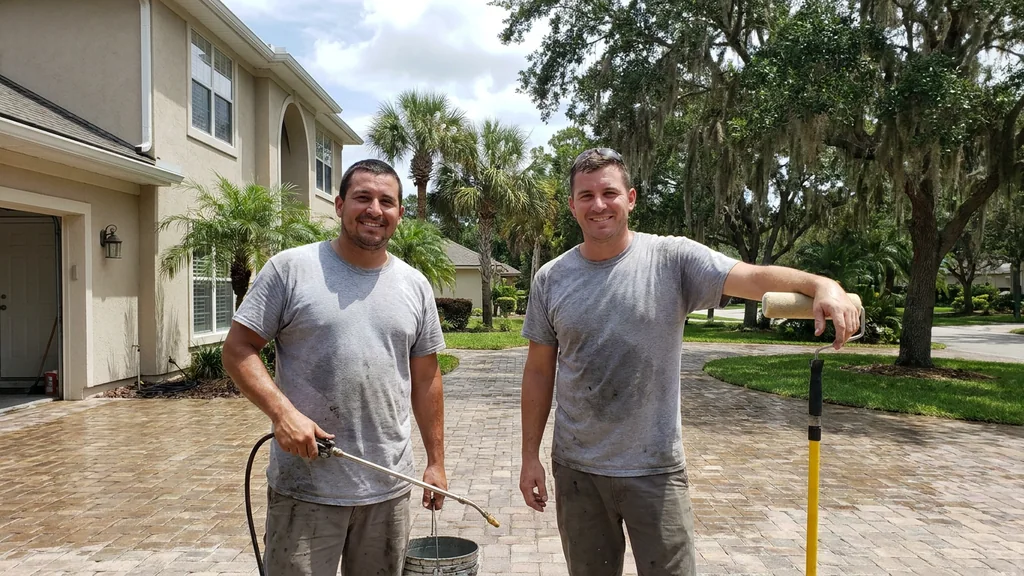
How does a paver sealing job work in Southside?
Walk the lot with you
The contractor walks your Southside property and notes where the water goes, especially on lots that fall toward a creek or ditch. Sunken or lifted sections get flagged, since a coat of sealer only preserves a dip. Any old product gets identified if it can be. Say so if you bought the home with the pavers already in place, since nobody may know what went on them before.
Lift the growth and grime
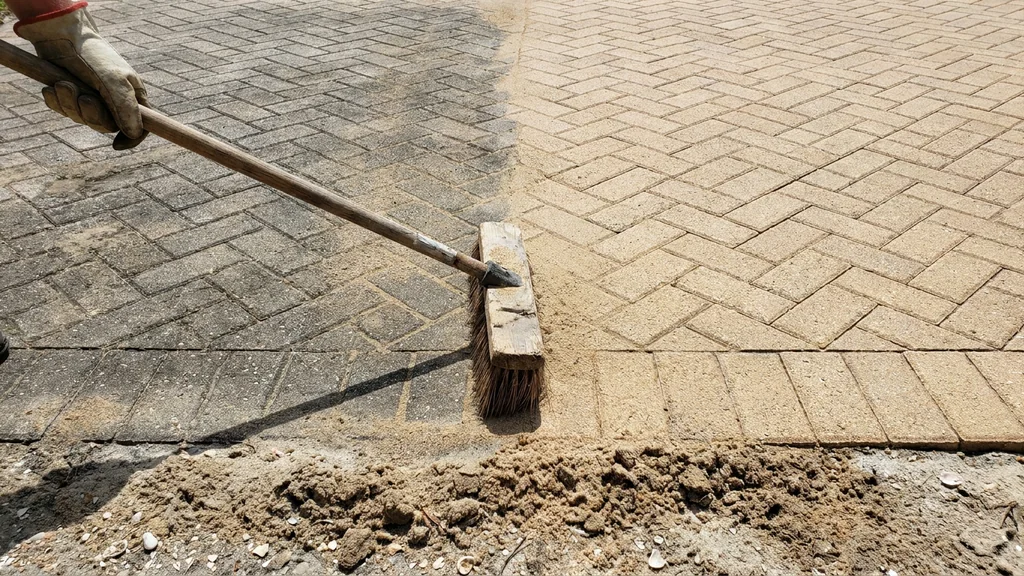
Washing clears green film from shaded Lakewood walks and road grime from drives near the highways. Rust stripes from irrigation get treated at this stage too, because a clear coat would hold them forever. The wash also pulls joint sand out, and that is expected, and the next step puts it back. Rinse water should also be kept off older wood trim and doors where the pavers meet the house.
Rebuild the joints with fresh sand
New sand goes into every joint and gets swept clean across the surface. On the deep sandy soil found around Duval County, full joints help keep dirt and weed seed out. A Southside driveway that has gone years without care can take a lot of sand. Expect this part to go slower on pavers that were never sealed, because the joints have had years to empty out.
Watch the sky and the low corner
Sealer needs a dry surface, so a clear afternoon alone is not enough. On the Southside, summer storms can roll through with little warning, and a corner near a creek dries last. A careful contractor checks that spot before starting, and if the forecast looks wrong, moving the date beats sealing damp pavers. Ask how much notice you will get if the day has to change.
Coat the pavers and keep cars away
The finish you chose goes on, often sprayed and then back-rolled into the joints for even coverage. One Jacksonville company says people can usually walk on it within a few hours and cars stay off about a day. Plan to park on the street if your Southside driveway is the one being sealed. Ask for the exact time before the crew leaves, and keep sprinklers off the fresh coat until that time has passed.
Complete paver services in Southside
The work happens in order so nothing dirty gets sealed in. First comes the wash, which lifts growth, grime and old film from your Southside pavers, and then sand goes back into every joint. The surface dries out before sealer goes on last. Call (904) 694-6107 to ask how many days your driveway, walkway or patio would take from start to finish.
Most Southside requests involve a driveway, a front walk or a back patio, and each one wears differently. Driveways near Beach Boulevard take tires and road grime, while shaded walks in Lakewood grow green first. Patios tucked behind ranch homes can hold water at the low side. Name the surfaces you want done when you request a quote, even if you only want a price.
Two decisions shape the sealer: its base and its look. Water-based sealer cannot go over solvent-based sealer, so whatever an earlier owner used may settle the first question. A wet finish adds shine but shows scuffs sooner than matte does, and matte often suits a Lakewood midcentury home or Englewood ranch. Call (904) 694-6107 to compare the two and ask which one suits your home.
Summer is the hard season here, since Jacksonville's rain falls mostly from May through September in brief, heavy storms. Sealer needs a dry surface, and a low corner near a creek may need another day. Shoulder months can make Southside scheduling easier. To find an opening that fits your plans, request a quote and share your dates, including anything you are planning around.
Questions to ask before you hire
- How will you shield my landscaping and lanai screens from overspray?
- Are the power washing and joint sand covered in your quote?
- How long do your coats tend to hold up this close to salt air?
- Can you do a test patch before you start?
- If I spot a problem next month, how do I reach you?
- Do you want money up front, or only at the end?
- What brand of sealer do you plan to use on my pavers?
Why local matters in Southside
Someone who knows the Southside knows it is several neighborhoods with one name. A 1926 Englewood plat, a 1946 Lakewood street and a 1989 Deercreek lot do not share the same pavers or the same history. That difference shows up in how much prep each one needs, so a quote written sight unseen can miss the real work. Name your subdivision when you request a quote, with no obligation to move ahead.
Local contractors also watch the creeks. Pottsburg Creek takes in storm drains and retention ponds, so low yards near it can stay wet after neighbors have dried out. That changes which day a sealing job can safely happen, and a crew from far away may not think to ask. Call (904) 694-6107 if your lot drops toward a creek or ditch, and ask how the contractor would plan around it.
Road history plays a part too. Philips Highway, Beach Boulevard and the Emerson Expressway all helped build out this side of town, and homes near them see steady traffic and grime. A contractor who drives those roads knows what a front walk here picks up in a year, and can plan the wash around it. To talk through your own frontage and get a free estimate, request a quote.
How did the Southside get so spread out?
Roads did most of the work, and each one opened up new land for houses. Bayard Highway, now Philips Highway, came through in 1934, and Beach Boulevard finally opened in 1949 after a wartime pause. By 1957, Southgate Shopping Center and the Koger Center had brought stores and offices out to where families were buying homes. If your home sits near those corridors and the driveway has seen better days, call (904) 694-6107.
Neighborhood life grew up around Huguenot Park near Nain Road and the playground beside Spring Park Elementary, which opened in 1942. Pottsburg Creek runs about 16 miles through the middle of it all, starting in the Southpoint area. The name Southside first meant what is now San Marco, then spread with every new road. Wherever your street falls in that story, you can request a quote for a free look.
Frequently Asked Questions
How much does it cost to seal pavers on the Southside?
Southside homeowners should expect roughly $1.50 to $2.50 per square foot to clean, sand and seal, based on commonly published regional prices. Total cost on the Southside depends on your square footage and how much prep is needed. Shade growth, missing sand and old sealer are the usual reasons a job lands higher.
What do professionals use to seal pavers?
They use a water-based or a solvent-based sealer, usually applied by spray and then back-rolled, according to one Jacksonville company. On older Southside pavers, the coat already there decides the choice. Water-based sealer cannot go over solvent-based sealer, so ask for the product name in your quote.
Why is paver sealing so expensive on the Southside?
The labor is what you are paying for. A proper job means washing, replacing joint sand, waiting for a dry surface and then sealing. Older Southside pavers can also need rust removal or extra cleaning first, which adds time before the sealer even comes out.
How often do you have to seal your pavers on the Southside?
The span companies commonly quote for Southside homes is two to five years between coats. Shaded Lakewood walks and busy driveways near Beach Boulevard may need a check sooner. One Jacksonville company suggests a water test: if it beads, the sealer still works, and if it soaks in, the coat is done.
Can a contractor seal pavers that sit near Pottsburg Creek?
Yes, as long as the pavers are clean and fully dry on the day of the work. Yards that slope toward the creek can take longer to dry after rain. Have the contractor check the lowest corner on your Southside lot before setting a date.
Will sealing level the sunken part of my Southside driveway?
No, sunken pavers have to be fixed first. One Jacksonville company resets low or lifted sections on a rebuilt base, because sealing only locks in what is already there. Point out dips near the garage or street during the first visit.
Do Deercreek homeowners need HOA approval for paver sealing?
Possibly, so read your community documents before you book. An HOA can review changes in appearance under Florida law when its declaration or published guidelines cover them. A switch to a glossy wet look is the kind of change worth asking about.
Is a wet look a good fit for a 1950s Southside ranch?
It can be, though many owners of low, simple houses choose matte instead. A wet look adds shine and shows scuffs sooner than matte does. Ask to see both finishes on a sample paver before you decide, and look at them in the light your driveway gets.
Ready for a Free Estimate in Southside?
Call (904) 694-6107 and tell us about your pavers.
Free, no obligations